
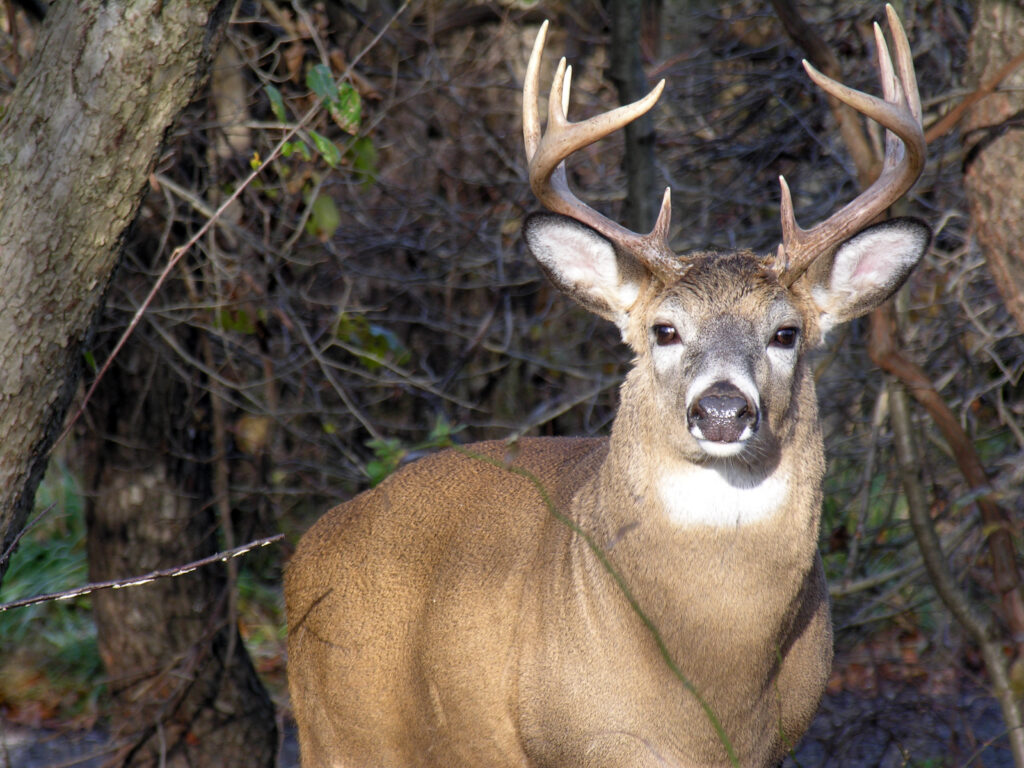
November 15th kicks off the firearm deer season in Michigan. It is an exciting time for many, and we wish all hunters good luck and prayers for safety.
While deer activity on the roads has been increasing throughout the last month, more activity in the woods by hunters will cause more deer movement. As a driver, staying alert for a deer suddenly appearing in the road is a constant activity while driving in the country and even in the city in Michigan.
Animal collision claims are very common and animal claims involving deer are the most common in Michigan with nearly 2 million deer making up Michigan’s deer herd. The Michigan State Police offers many tips on their webpage to reduce the chances of a collision with a deer.
Here are a few:
- Most traffic crashes involving deer happen from 8 a.m. to 9 a.m. and 6 p.m. to 9 p.m. Reducing speeds at those times will allow more time to respond to a deer in the road. Always be alert especially in high traffic deer areas and where deer crossing signs are posted.
- Deer typically follow one another in single file, so if you see one deer, there are likely more nearby.
- When appropriate, use high-beam headlights and additional driving lights to see the road better. Look for the reflection of headlights in a deer’s eyes and deer silhouettes on the shoulder of the road.
- If a crash is unavoidable, do not swerve! It is instinct to do this, but trying to avoid a deer may cause a loss of control of the vehicle and a more serious traffic crash. Hold the steering wheel with both hands, brake firmly, and try to stay in your lane.
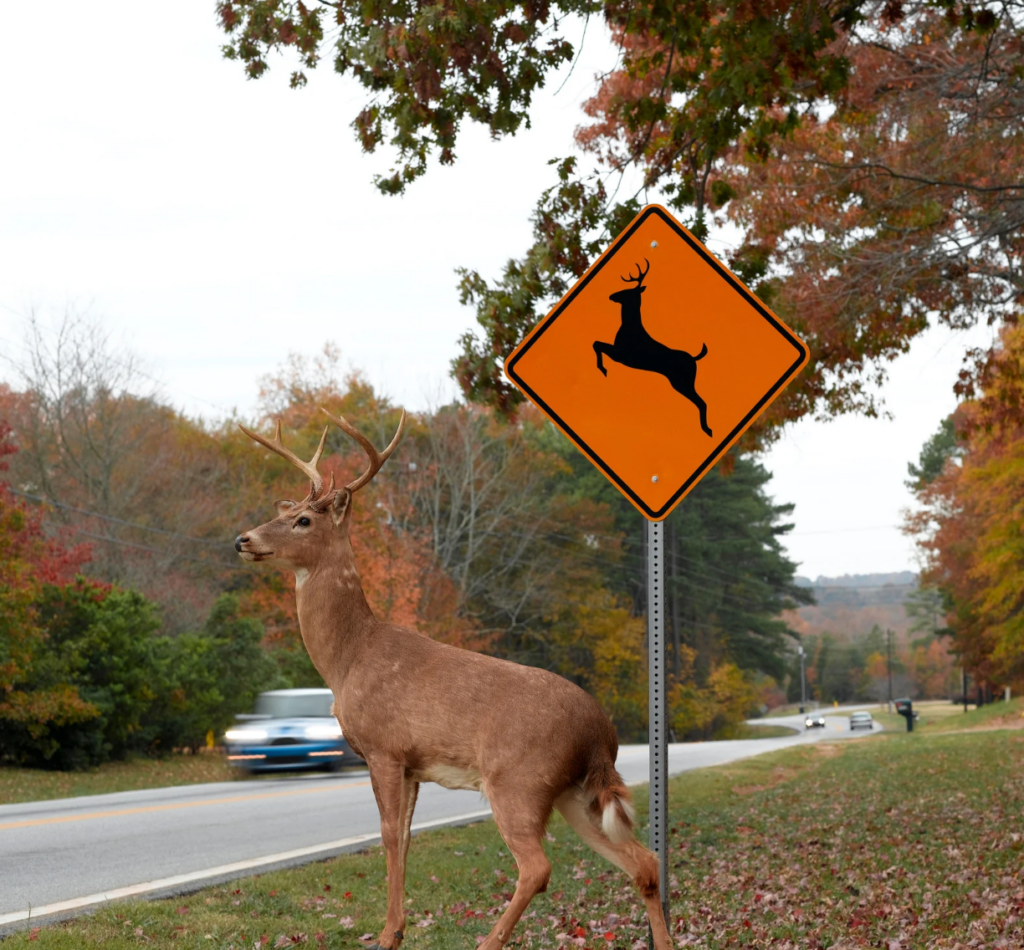
Two things you can do to prepare for a car/deer accident are 1.) review your auto insurance coverage relating to animal collisions and 2.) create a roadside emergency preparedness kit.
The two auto coverages that relate to animal collisions are collision and comprehensive. While collision seems like a no-brainer, comprehensive is the one you may need the most.
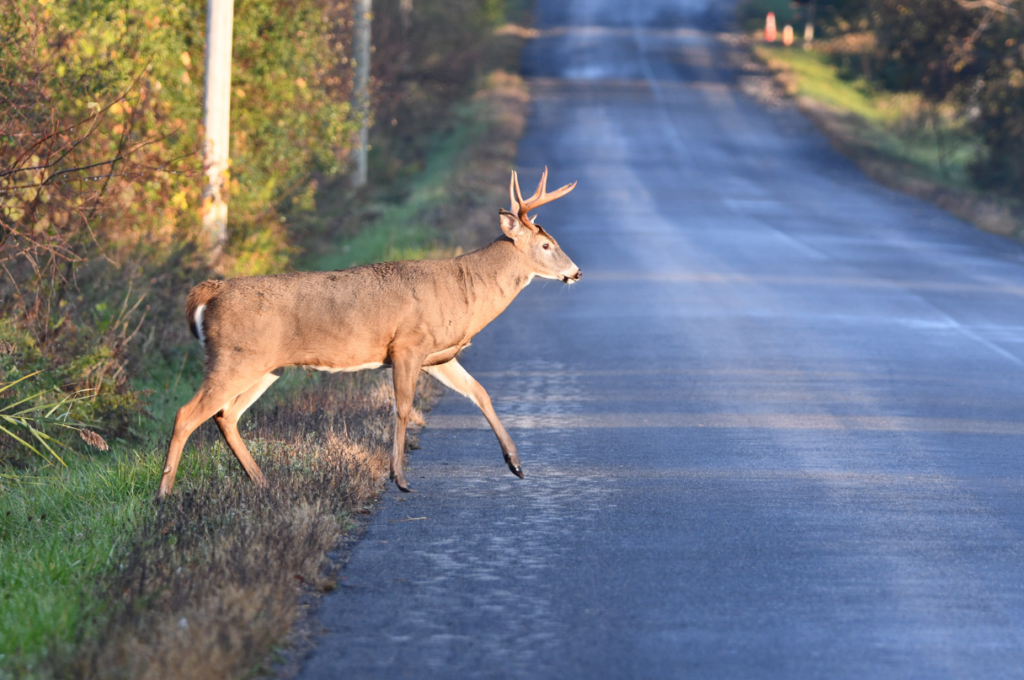
Here is how each coverage would be triggered:
- Your vehicle collides with a dead deer. Collision insurance covers you for collisions with moving vehicles and inanimate objects. If you have collision coverage, damage to your vehicle is covered after you have paid the deductible.
- A deer collides with your vehicle. Comprehensive insurance covers you, unless otherwise mentioned or excluded from your policy. If you have this coverage, your vehicle will be repaired once you have paid the deductible.
Prepare for an animal collision as you would for any unforeseen road-related event. Pack an emergency first aid kit with flares, a flashlight, roadside reflectors, blankets, and a small supply of food and water. Make sure your hazards and headlights work and that your tires and brakes are in good shape.
What to do if you are in an accident:
- Pull over to a safe area, away from traffic. Turn off the engine. Put on your hazards.
- Are you injured? Are your passengers injured? Have everyone exit the vehicle to a safe area if they can move. Check their condition and tend to any wounds. If someone is severely injured, do not attempt to move them.
- Accidents can cause shock. Check vital signs, keep everyone calm and shielded from the cold. Use your blankets.
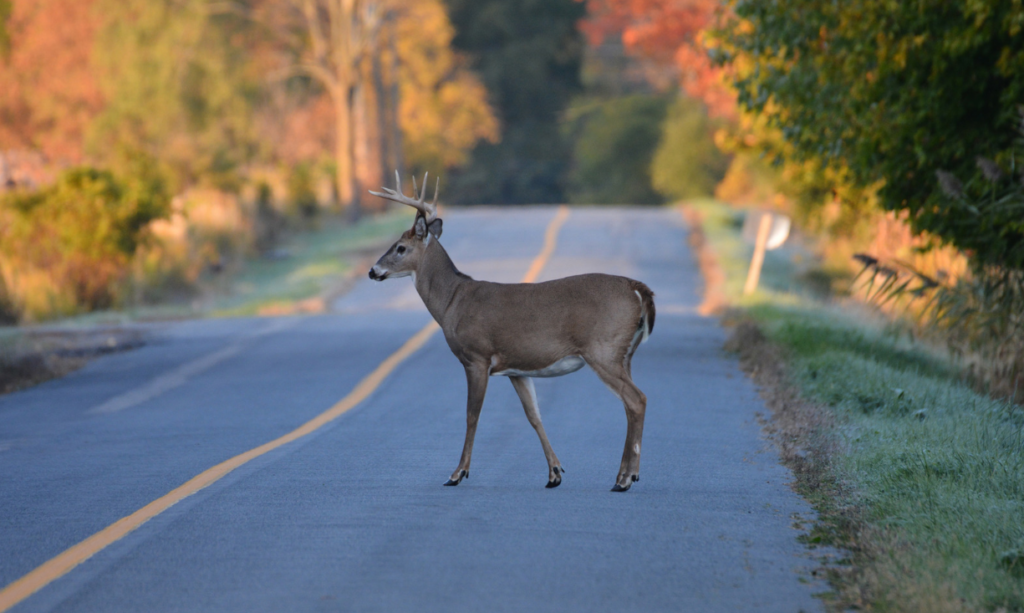
Call 911 and set up flares around the vehicle and animal to prevent other collisions. Once you have covered the bases, wait for the police and first responders to arrive at the scene, then fill out a police report.
Call your insurance company to file your claim. If your car needs to be towed, they will tell you how.
If the animal is injured, keep away for your own safety and let the 911 dispatcher know.
Stay safe in the woods and safe on the roads as you enjoy the beautiful wildlife and nature.
